


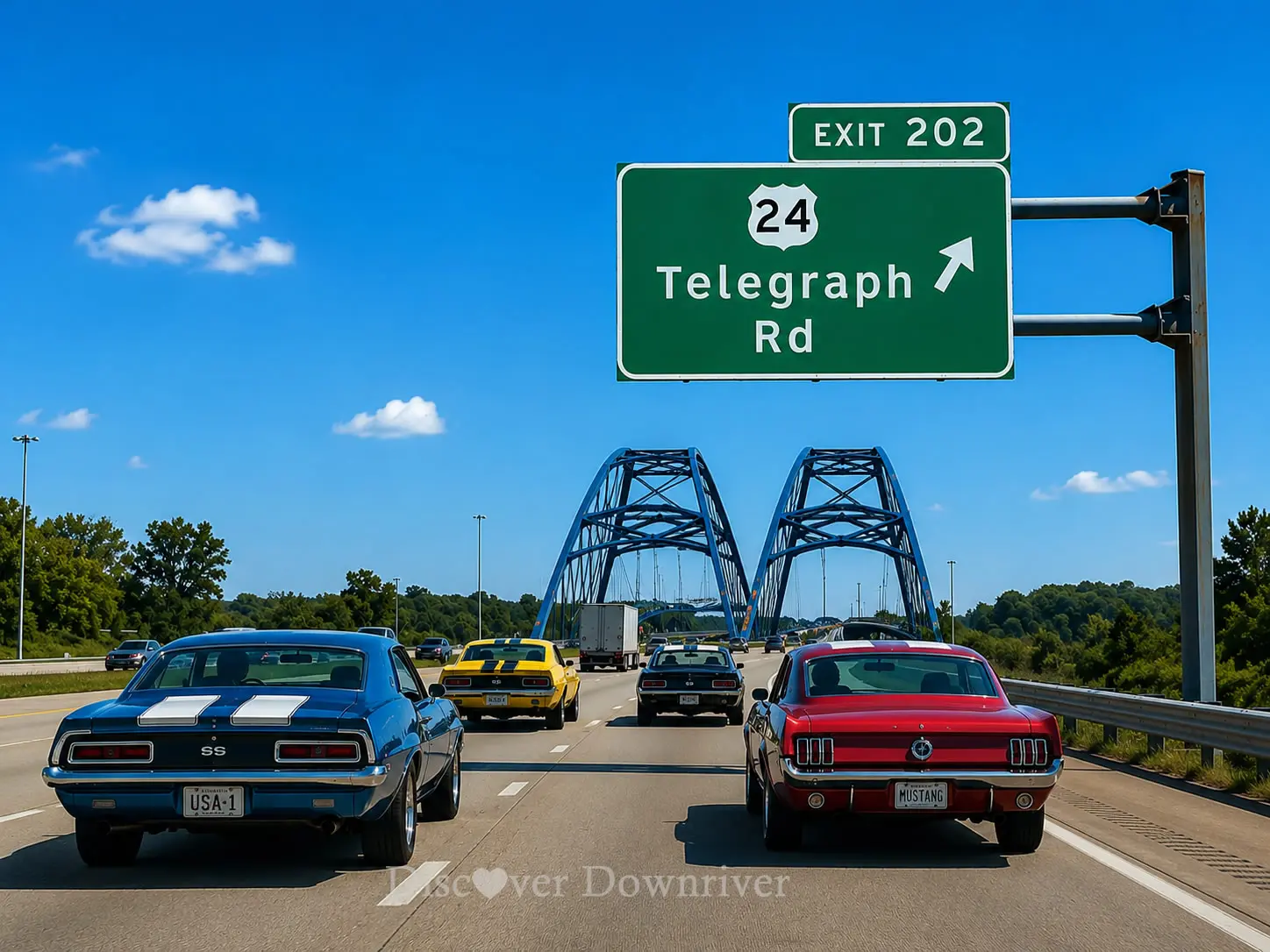
Telegraph Road: How a Downriver Highway Inspired One of Rock’s Greatest Songs
Most people who travel Telegraph Road think of it as just another busy Michigan thoroughfare. Stretching through Monroe, Wayne, and Oakland Counties, the roadway has long served as a vital transportation corridor connecting communities, businesses, and industries. But what many people don’t realize is that this familiar road inspired one of the most ambitious and critically acclaimed songs in rock history.
That song is “Telegraph Road” by Dire Straits.
A Musical Masterpiece Born in Michigan
Released in 1982 as the opening track on Dire Straits’ album Love Over Gold, “Telegraph Road” runs more than 14 minutes and is widely regarded as guitarist and songwriter Mark Knopfler’s masterpiece. The song tells a sweeping story of settlement, growth, industrialization, and economic decline, all centered around a single road.
The inspiration came during Dire Straits’ 1981 tour when Knopfler was riding in the front seat of the band’s tour bus as it traveled along Telegraph Road near Pontiac, Michigan.
Looking out the window, he observed a landscape unlike anything he had seen elsewhere. Dense forests gave way to shopping centers, auto plants, warehouses, highways, and miles of suburban development. It was a visual timeline of American expansion and industrial growth unfolding before his eyes.
A Literary Influence
At the same time, Knopfler was reading the Nobel Prize-winning 1917 novel Growth of the Soil by Norwegian author Knut Hamsun.
The novel tells the story of a solitary settler who carves out a life in the wilderness, only to watch modernization and industrial development gradually transform—and ultimately consume—the world he built.
The themes resonated deeply with what Knopfler was seeing outside the bus window. He began connecting the history of Telegraph Road with the broader story of America’s development.
The result was “Telegraph Road.”
The Story Told Through Music
The song unfolds like a historical timeline.
It begins quietly with a lone pioneer establishing a settlement in the wilderness. Knopfler sings of a simple road being built, followed by churches, schools, and homes. As the years pass, more people arrive and communities grow.
Soon the pace accelerates.
Factories appear. Railroads arrive. Traffic increases. Commerce flourishes. The music builds in intensity as industry transforms the landscape.
The road becomes more than a road—it becomes a symbol of progress.
But the story doesn’t end there.
The Rise and Fall of Industrial America
As the song reaches its climax, the optimistic narrative gives way to disappointment and frustration.
The booming factories that once provided opportunity begin to disappear. Workers face layoffs and economic uncertainty. Entire communities struggle as industries decline.
Knopfler’s haunting guitar solo captures the emotional weight of that transition, reflecting the economic realities faced by many Midwestern communities during the manufacturing downturn of the 1970s and 1980s.
For many listeners, especially those in Michigan, the song became an artistic representation of the rise and decline of America’s industrial heartland.
Why the Song Still Resonates Today
More than four decades after its release, “Telegraph Road” remains one of Dire Straits’ most celebrated compositions.
The themes explored in the song—growth, prosperity, change, and economic uncertainty—continue to resonate with communities across Southeast Michigan and the Downriver area.
Telegraph Road itself still stands as a living reminder of those changes. Along its route, travelers can see traces of every era of Michigan’s history, from wooded landscapes and historic neighborhoods to industrial centers, commercial developments, and revitalized communities.
In many ways, the road serves as a physical timeline of the state’s past.
A Michigan Story Set to Music
While “Telegraph Road” was written by a British musician, its story is deeply rooted in Michigan.
Inspired by a drive down one of the state’s most iconic highways and influenced by a classic novel about settlement and progress, Mark Knopfler created a song that captured both the promise and the challenges of industrial America.
For residents of Southeast Michigan, it’s a reminder that sometimes the most ordinary places can inspire extraordinary art—and that the roads we travel every day often carry stories far richer than we realize.