


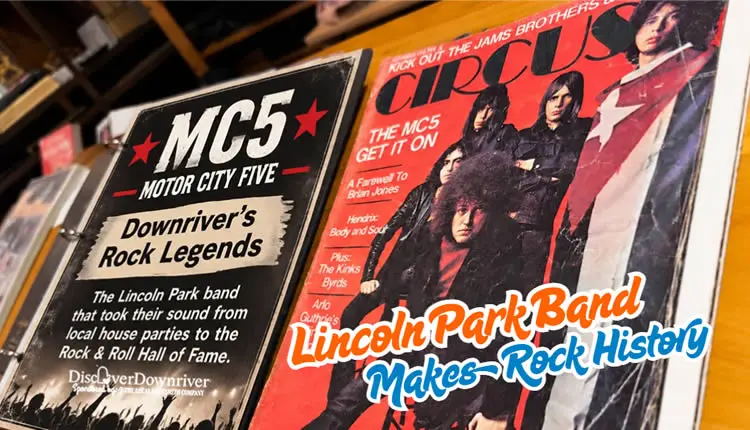
BEFORE THERE WAS PUNK ROCK, THERE WERE FIVE GUYS FROM LINCOLN PARK WHO HELPED CHANGE MUSIC HISTORY!
Story and Photos by Ken Welsch
Before they were making headlines in Rolling Stone and rocking stages around the world, MC5 (Motor City Five) was just five guys from Lincoln Park making music at local house parties!
Remembering MC5, Downriver’s Rock n’ Roll Rebels
“Back in Lincoln Park where I was mostly raised,
Hanging around town where I got totally crazed.”
-lyrics from “Teenage Lust” by MC5
 By the time those lyrics filled concert halls and music festivals, the five-man band from Lincoln Park known as MC5 had written a rock n’ roll story that traveled far beyond the legendary Downriver house parties of their early days.
It was 1970 when “Teenage Lust” was released as part of their debut studio album, “Back in the USA.” By then, MC5 was known worldwide for high-energy, high-volume performances that would earn them a place among rock n’ roll’s best ever acts. Consider the resume and you realize that Champaign dreams can and do come true:
House band at Detroit’s famed Grande Ballroom.
A legendary performance outside the infamous 1968 Democratic National Convention in Chicago.
A debut live album that featured an oft-covered hit song, “Kick Out the Jams.”
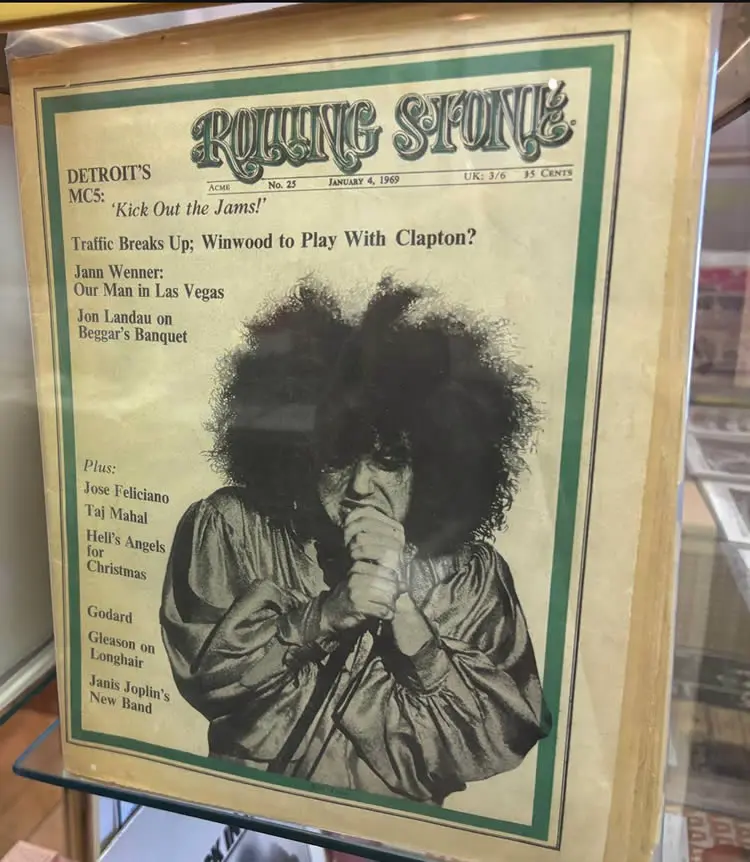
And perhaps the pinnacle: the cover of the Rolling Stone.
It was vocalist Rob Tyner (born Rob Derminer) whose image adorned the cover, alongside headlines for lesser stories on Eric Clapton teaming with Steve Winwood, a review of the Rolling Stones’ “Beggar’s Banquet,” and Janis Joplin’s new band. For one edition, at least, Lincoln Park-born MC5 overshadowed them all.
Railsplitters turned rockstars
The band’s origins trace to guitarists Lincoln Park natives Wayne Kramer and Fred “Sonic” Smith. Kramer and his band the Bounty Hunters were known locally for high-energy shows. Smith was doing likewise with the Vibratones.
The two axemen came together in the mid-1960s, eventually bringing in bass player Michael Davis and drummer Fred “Machine Gun” Thompson. Tyner was originally pegged to serve as band manager, but he wound up behind the mic because of his strong voice and commanding stage presence.
It was Tyner who dreamed up the name MC5, short for Motor City Five. By 1966, the lasting MC5 lineup was born.
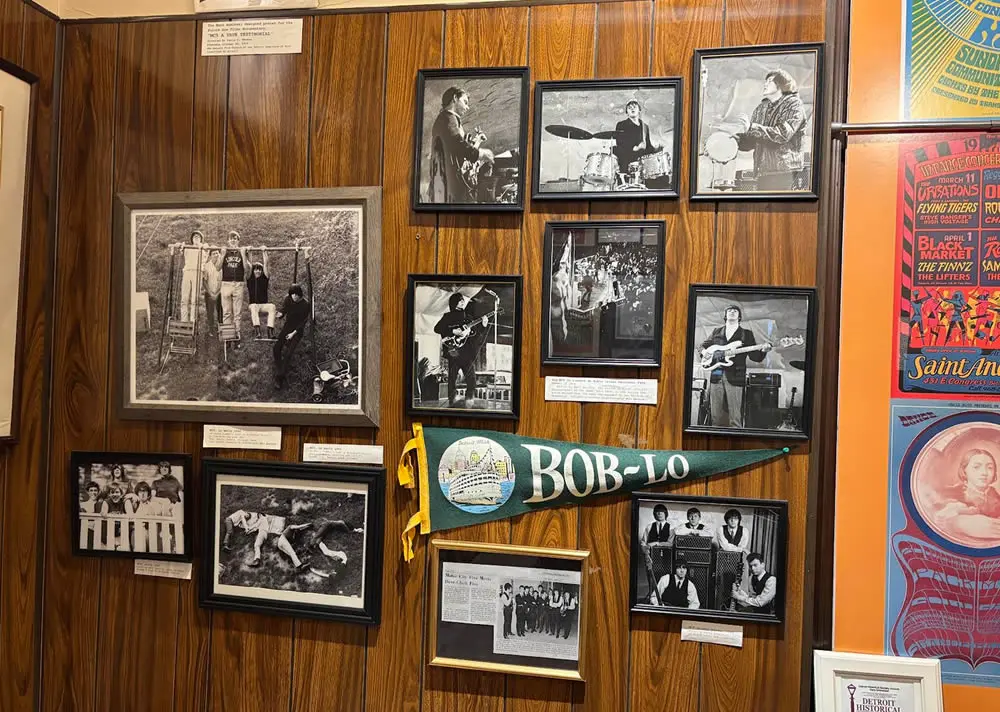
Their energetic performances traveled from house parties around Lincoln Park to performances at the Lincoln Park Bandshell, where today a plaque commemorates those early performances and the Rock & Roll Hall of Fame success that followed. Still working as a cover band, MC5 expanded to playing at venues throughout the Detroit area, including the dance pavilion on Bob-Lo Island, eventually landing as the house band at the Grande Ballroom.
A band ahead of its time
 By appearance, MC5 would have fit in on stage at Woodstock. But their sound and attitude was often – particularly later on originals such as “Teenage Lust” – more in line with the punk rock movement of the mid- to late-’70s. In fact, MC5 is sometimes credited with pioneering the U.S. punk scene, blending it with garage rock, psychedelic rock and blues.
An East Coast tour in 1967 landed them gigs with the likes of Cream and Big Brother and the Holding Company, whom they regularly upstaged. Their thunderous shows caught the attention of John Sinclair, anti-Vietnam War activist, who took over as the band’s manager.
In 1968, Sinclair led them to perform a legendary performance outside the Democratic National Convention in Chicago. While other scheduled artists declined to play fearing the potential for rioting, MC5 played an eight-hour show.
The jam that launched them
While their raucous concerts helped define MC5’s image, “Kick Out the Jams” was the live album that catapulted them to new heights. Released in early 1969, “Kick Out the Jams” was an eight-song romp that blended covers such as “Ramblin’ Rose” and “Motor City is Burning” with five originals, including the title track.
 In typical rock n’ roll bad boy fashion, Tyner breaks into the track by screaming, “Kick out the jams, (expletive)!” Recorded over two nights in 1968 at the Grande, the album was a massive success, despite retailers such as Hudson’s refusing to stock it due to the vulgarities.
That album, coupled with the near-simultaneous appearance on Rolling Stone, had MC5 riding high to close out the ‘60s. “Back in the USA” was released in early 1970 with modest success, and the public reaction to a second studio album, “High Times”, released over the summer of 1971, was even more measured.
The six-year run ended when MC5 played its final show on New Year’s Eve in 1972, but one fact was indisputable – five guys from Lincoln Park had made their rock n’ roll mark. Parade magazine ranked MC5 one of the best rock bands ever, and VH1 named them one of the greatest hard rock acts of all time.
The beat goes on
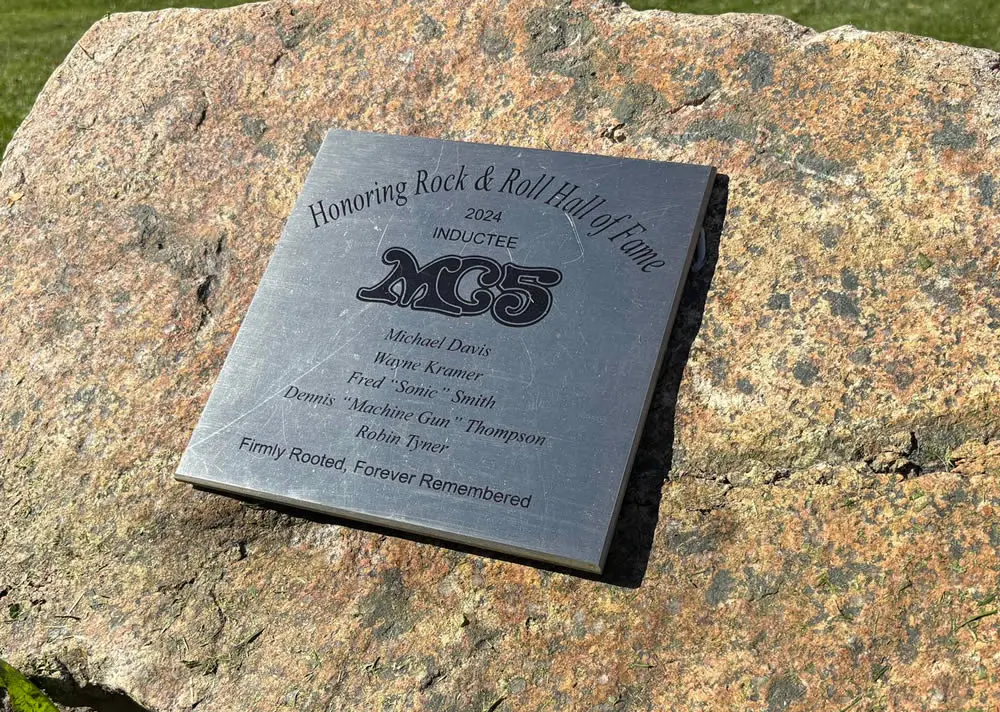
Sadly, when the band was inducted into the Rock & Roll Hall of Fame on Oct. 19, 2024, none of the five members were alive to savor the accomplishment. Tyner (1991), Smith (1994) and Davis (2012) all passed away years earlier. Kramer and Thompson, who revived the MC5 name in 2022 with a small tour and a new album, passed away earlier in 2024. Their final album, “Heavy Lifting,” was released posthumously.
In the years and decades since MC5 was at it peak, Downriver never forgot its hometown rock stars. The plaque outside the bandshell commemorates the group’s 2024 induction into the Rock Hall. A mile away at the Lincoln Park Historical Society & Museum, an entire room is loaded with photos, concert posters, autographed equipment and other memorabilia, all dedicated to five local boys who helped define a generation’s sound while skyrocketing to rock n’ roll heights.